USB to RS485 isolated converter series - USB485
The USB485 family of USB to RS485 converters installs as virtual comports, and can be accessed just like a standard comport in the PC. They are powered from the USB side, hence no external power supply is needed.
They are fully Modbus compatible, and both 2 wire (half duplex) and 4 wire (full duplex) models are available.
They support baudrates up to 1 Mbps, and have 128 bytes transmit and 256 bytes receive fifo.
Last but not least, all models are electrically isolated, as any high-quality converter should be!
|
|
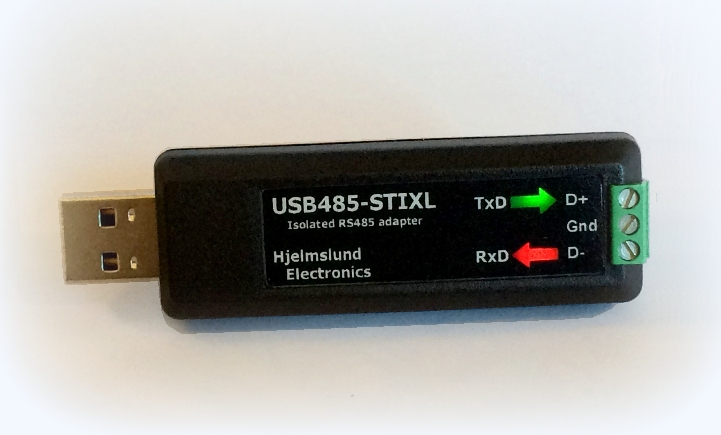
2 wire half duplex rs485 converter: USB485-STIXL
|
USB485-STIXL : Isolated USB to RS485 converter
A classic 2 wire, half duplex model, that meets most customers demands.
Its 2500 Volt isolation barrier and ESD protection gives it the quality needed, for being used in industrial automation.
During operation it automatically switches between transmit and receive mode, without any need for the user to control the data direction programmatically by asserting RTS, as seen in simpler converters.
 USB485-STIXL product sheet
 Buy USB485-STIXL Online [EUR 80 @1] Buy USB485-STIXL Online [EUR 80 @1]
|
|
|
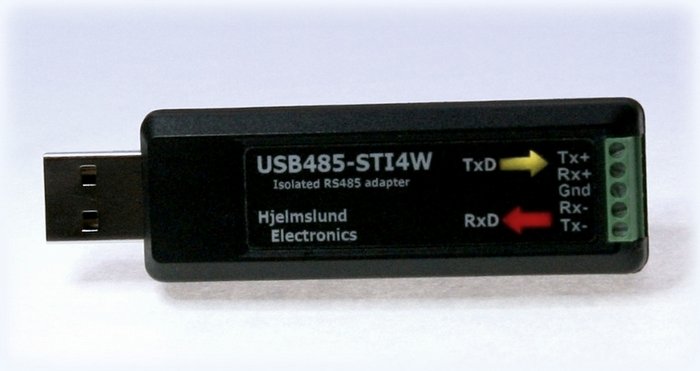
4 wire full duplex rs485 / rs422 converter: USB485-STI4W
|
USB485-STI4W : Isolated USB RS485/422 converter
The STI4W is our 4 wire full duplex RS485/422 converter.
The receiver is always enabled, but the transmitter is only
enabled during data transmission, thus making it possible to use
it even as a slave device.
* RS422 users : The STI4W fullfill both RS422 and RS485 specifications.
USB485-STI4W product sheet
Buy USB485-STI4W online [EUR 85 @1]
|
|
|
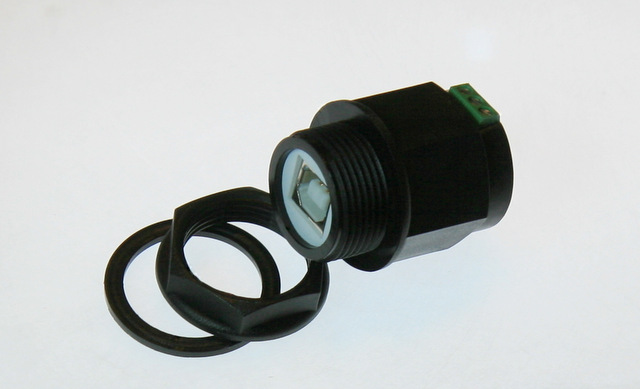
Isolated RS485 panel mount converter: USB485-ILP
|
USB485-ILP : Panel mount RS485 converter, isolated
Mount it as any other port in your enclosure, with the USB
connection outside and the RS485 cable inside.
By placing your isolation barrier in the cabinet wall, you avoid getting USB cables
into your industrial installation, as well as avoiding having industrial
communication near your pc, hence maintaining the best possible system separation.
Isolated, 2 wire, half duplex
USB485-ILP product sheet
Buy USB485-ILP online [EUR 85 @1]
|
|
|
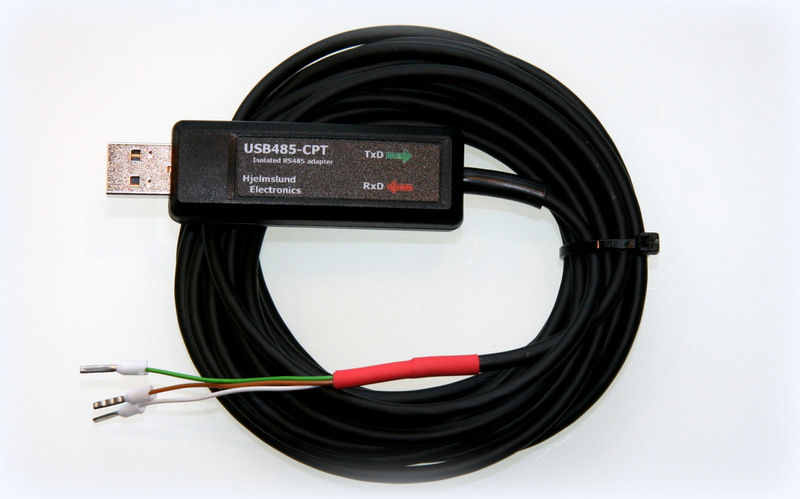
USB RS485 converter with cable endings: USB485-CPT
|
USB485-CPT : Isolated RS485 converter with cable endings
The CPT is our 2 wire, half duplex, cable version converter.
3 meter highly flexible cable, but other lengths available upon request.
Connections
Green : Data +
Brown : Data -
White : Gnd
USB485-CPT product sheet
Buy USB485-CPT online [EUR 90 @1]
|
|
|
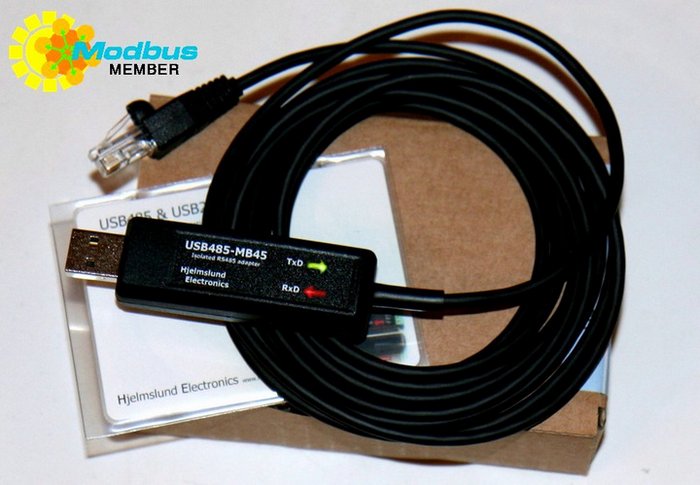
RS485 with cable and RJ45 - for Modbus: USB485-MB45
|
USB485-MB45 : Isolated RS485 converter for Modbus
The RJ45 connector is wired according to the
Modbus specifications Ver 1.02 Section 3.5.1
Pin 4 : Data -
Pin 5 : Data +
Pin 8 : Common
The cable screen is connected to Modbus 'common' internally in the converter. Standard cable length is 3 meter, but 1.5 & 5 meter cable are also available.
USB485-MB45 product sheet
Buy USB485-MB45 online [From EUR 89 @1]
|
IO products - serial port controlled
|
|
|
|
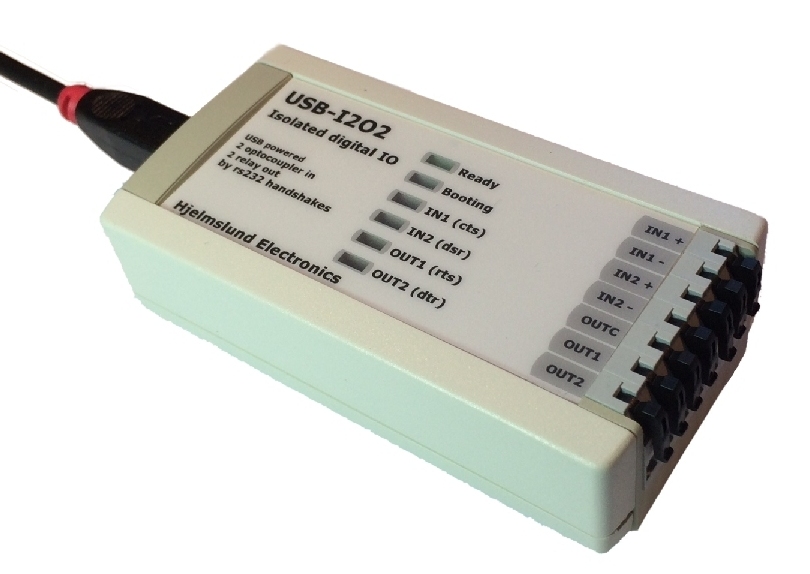
USB powered 2 channel digital IO system: USB-I2O2
|
USB-I2O2 : Comport controlled 2 channel IO system
The USB-I2O2 have 2 opto isolated inputs and 2 relay outputs, and is programmed as a serial port, using the handshake signals to set and read the IOs.
No special drivers are needed, just program it using the standard windows component mscomm32.ocx in your application.
Opto coupler inputs :
3-48Vin, AC and DC.
Relay outputs :
250Vac / 3A SPST - normally open
USB-I2O2 product sheet
Buy USB-I2O2 online [EUR 110 @1]
|
USB to RS232 isolated converter series - USB232
Our isolated USB to RS232 converters are ideal for connecting PCs with industrial installations, maintaining a high quality electrically separation between the 2 systems.
They installs as virtual comports and can be accessed just like any other comports in the PC. The converters are USB powered and need no external powersupply.
All our RS232 converters support baudrates up to 1 Mbps, and includes 128 bytes transmit and 256 bytes receive buffers.
|
|
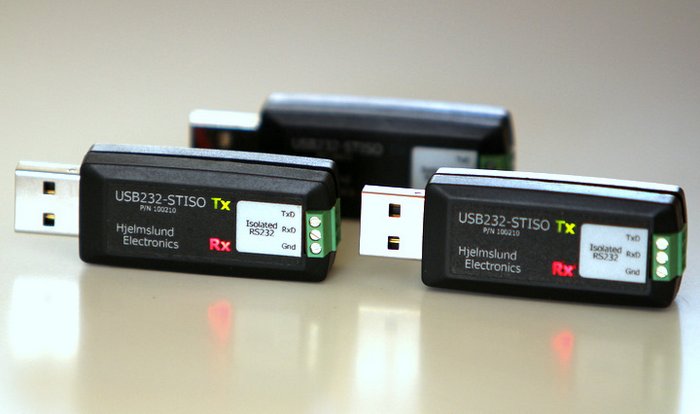
Isolated RS232 converter: USB232-STISO
|
USB232-STISO : Isolated USB to RS232 converter
Size doesn't matter, but....it sometimes does!
The smallest isolated RS232 converter on the market, so if you want compactness, this should be your choise.
Compact - USB powered - easy to use
- Height : 14mm
- Width : 23mm
- Length : 66mm
 USB232-STISO product sheet
 Buy USB232-STISO online [EUR 65 @1] Buy USB232-STISO online [EUR 65 @1]
|
|
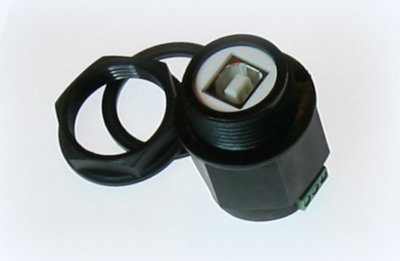
Isolated RS232 panel mount converter: USB232-ILP
|
USB232-ILP : Panel mount USB to RS232 converter
The USB232-ILP is an isolated RS232 converter for through hole (25mm diameter) mounting in cabinet walls, for giving easy access to internal RS232 devices, thru an external USB connection.
The converter have a 2.5 KVolt isolation barrier and 15KV ESD protection, hence enough robust for being used in industrial installations.
USB232-ILP product sheet pdf
Buy USB232-ILP online [EUR 72 @1]
|
|
|
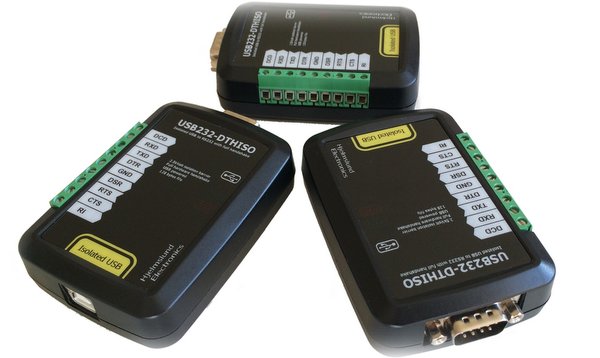
RS232 converter with handshakes : USB232-DTHISO
|
USB232-DTHISO : Isolated USB to RS232 converter
Desktop version RS232 converter with full handshake.
It has clearly marked which signals are inputs and which are outputs, so no doubts and no more googling before hooking up your RS232 devices - no more problems!
It is USB powered, consuming less than 100mA, so it can be powered from any USB port and hub flawlessly.
USB232-DTHISO product sheet
Buy USB232-DTHISO online [EUR 103 @1]
|
USB isolator series - USBISO
USB isolator and transient protection for USB 2.0 full speed systems. No powersupply and no drivers required.
The isolators are intended to be used in industrial environments, where the host computer needs to be isolated and protected from external electrical interference, and where groundloops needs to be eliminated.
The USBISO-AA is a little stick type and the USBISO-DT15 is a larger desktop type, with extended isolation voltage.
|
|
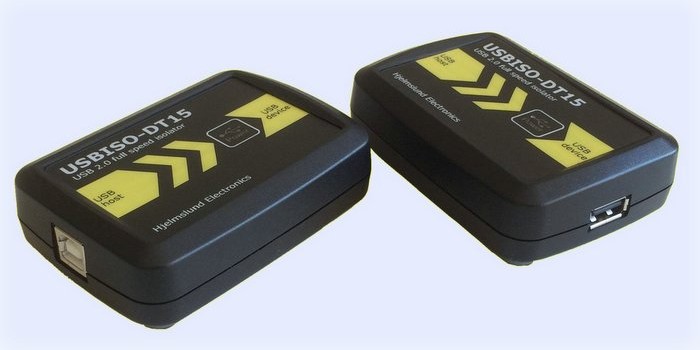
USB isolator with extended isolation voltage: USBISO-DT15
|
USBISO-DT15 : Desktop type isolator for USB 2.0 systems
Brief specs.
- 2.500 Volt rms isolation
- IEC 61000-4-2 Level 4 ESD Protection
- Can deliver 200mA to the external USB device
- Height : 29mm
- Width : 64mm
- Length : 89mm
USBISO-DT15 product sheet
Buy USBISO-DT15 online [EUR 88 @1]
|
|
|
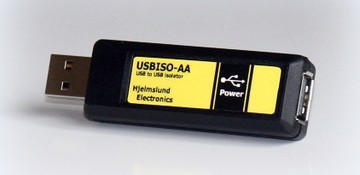
USB isolator and protection device: USBISO-AA
|
USBISO-AA : Stick type isolator for USB 2.0 systems
 Video review of USBISO-AA Video review of USBISO-AA
Brief specs.
- 1.000 Volt DC isolation
- IEC 61000-4-2 Level 4 ESD Protection
- Can deliver 200mA to the external USB device
- Height : 14mm
- Width : 23mm
- Length : 66mm
USBISO-AA product sheet
Buy USBISO-AA online [EUR 72 @1]
|


 Dublin, Ireland